


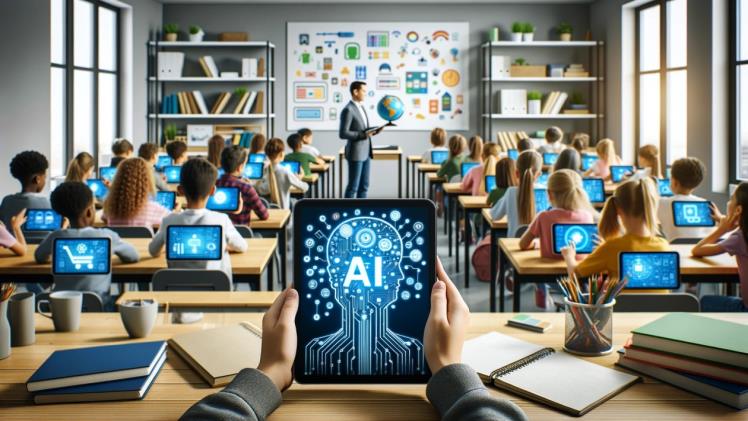
The advent of Artificial Intelligence (AI) is redefining various sectors, and education is no exception. This article explores how AI is being integrated into the educational system, the implications of this integration, and the evolving role of AI-driven tools like ‘teacher AI‘. The aim is to offer a comprehensive view of AI’s burgeoning impact on education.
Revolutionizing Teaching and Learning
AI technology is revolutionizing the teaching and learning process in several ways. AI-driven platforms are enabling personalized learning experiences by adapting content to suit individual students’ learning styles and paces. These systems can analyze students’ performance, identify areas of struggle, and tailor the curriculum accordingly. AI is also facilitating more interactive and engaging learning environments through gamification and interactive content.
Automating Administrative Tasks
One of the significant impacts of AI in education is the automation of administrative tasks. AI systems can efficiently handle tasks like grading, attendance tracking, and scheduling, freeing up educators’ time to focus more on teaching and less on administrative duties. This automation not only increases efficiency but also reduces the likelihood of human error in these processes.
Teacher AI: Enhancing Educational Delivery
‘Teacher AI’ refers to AI-driven tools and applications that assist in educational delivery. These tools can provide real-time feedback to students, offer personalized learning recommendations, and even identify students at risk of falling behind. Teacher AI is not designed to replace human educators but to augment their capabilities and provide them with valuable insights to enhance their teaching methods.
AI in Curriculum Development and Assessment
AI is playing a pivotal role in curriculum development and assessment. By analyzing vast amounts of educational data, AI can help in designing curricula that are more in line with current industry trends and student needs. In assessments, AI algorithms are being used to create adaptive testing systems that can adjust the difficulty level of questions based on the student’s performance.
Challenges and Ethical Considerations
Despite the benefits, the integration of AI in education comes with challenges and ethical considerations. There are concerns about data privacy and the security of student information. The potential for AI to perpetuate biases is also a critical concern, as AI systems are only as unbiased as the data they are trained on. Ensuring equitable access to AI-driven educational tools is another significant challenge, especially in under-resourced areas.
Preparing Students for an AI-Driven Future
AI in education is not only about enhancing current educational practices but also about preparing students for a future where AI will be a pervasive part of many industries. Incorporating AI literacy and skills into the curriculum is essential to prepare students for this future. This includes teaching students about AI technology, its applications, and the ethical implications of AI.
AI-Enabled Personalized Learning
One of the most promising applications of AI in education is in personalized learning. AI systems can analyze individual learning patterns and customize content delivery, making education more accessible and effective for different learning abilities and styles. This personalized approach can help in catering to the diverse needs of a global student population.
Enhancing Distance Learning
AI is significantly enhancing distance learning, a development that has become particularly crucial in the aftermath of the COVID-19 pandemic. AI-driven platforms are not only facilitating interactive and engaging learning experiences but are also instrumental in bridging the gap caused by the absence of physical classroom interactions. By utilizing sophisticated algorithms, these platforms can tailor content to individual learning styles, making education more personalized and effective. They can also offer support and resources to students who may not have access to traditional classroom settings, thereby democratizing education. Additionally, AI tools can track student progress, providing educators with insights to optimize teaching strategies and improve learning outcomes. In scenarios where direct teacher supervision is limited, AI can offer supplementary assistance, ensuring that students remain engaged and motivated. This technology also enables real-time feedback and assessment, helping students to better understand their strengths and areas for improvement.
The Future of AI in Education
Looking ahead, the potential of AI in education is vast. We can expect more sophisticated AI tools that can provide deeper insights into the learning process, offer more personalized and adaptive learning experiences, and create more efficient educational systems. However, the success of these advancements will depend on addressing the current challenges and ensuring that AI in education is accessible, ethical, and effectively integrated with traditional teaching methods.
Conclusion
AI’s integration into the education system marks a significant shift in how education is delivered and experienced. From automating administrative tasks to revolutionizing curriculum development and assessment, AI is enhancing the efficiency and effectiveness of educational processes. Teacher AI and other AI-driven tools are augmenting the capabilities of educators, enabling personalized learning, and preparing students for a future dominated by AI technology. However, navigating this transformation requires careful consideration of the challenges and ethical implications. With thoughtful implementation, AI has the potential to significantly enrich and advance the educational landscape.